
Household & carpenter ant control in WNC
Dealing with ants in your North Carolina home? Pisgah Pest Control treats household and carpenter ants across Asheville, Brevard, Hendersonville and beyond.
A few ants on the kitchen counter is a different problem than ants chewing through the wood in your walls, but either way, once you're seeing them regularly, it's worth figuring out what you're actually dealing with.
Some ant problems are a nuisance. Others can lead to real damage if they're left alone.
Pisgah Pest Control has been helping homeowners across Asheville, Brevard, Hendersonville, Waynesville, and Cashiers identify and treat ant problems for over 50 years. We know the difference between an ant that's just looking for food and one that's settled into your home, and we'll treat your home accordingly.
Seeing ants around your home? Go ahead and give us a call.
Why ants are so common in WNC homes
The wooded surroundings and mild, humid climate across Western North Carolina create good conditions for ants pretty much year-round. They're drawn in by food, moisture, and shelter, and homes near tree lines or with older wood structures tend to see more activity.
Most ant activity picks up in spring and summer as colonies become more active, but it's not unusual to see them indoors any time of year, especially if there's a food or moisture source drawing them in.
Common entry points for ants
- Gaps around windows, doors, and utility lines
- Cracks in the foundation or siding
- Tree branches or shrubs touching the side of the house
- Areas of moisture damage or rot, particularly around crawl spaces
Household ants vs. carpenter ants - what's the difference?
Most people can't tell the two apart on sight, and that's understandable. Both are common in WNC, but they behave very differently once they're in your home.
Signs of household ants
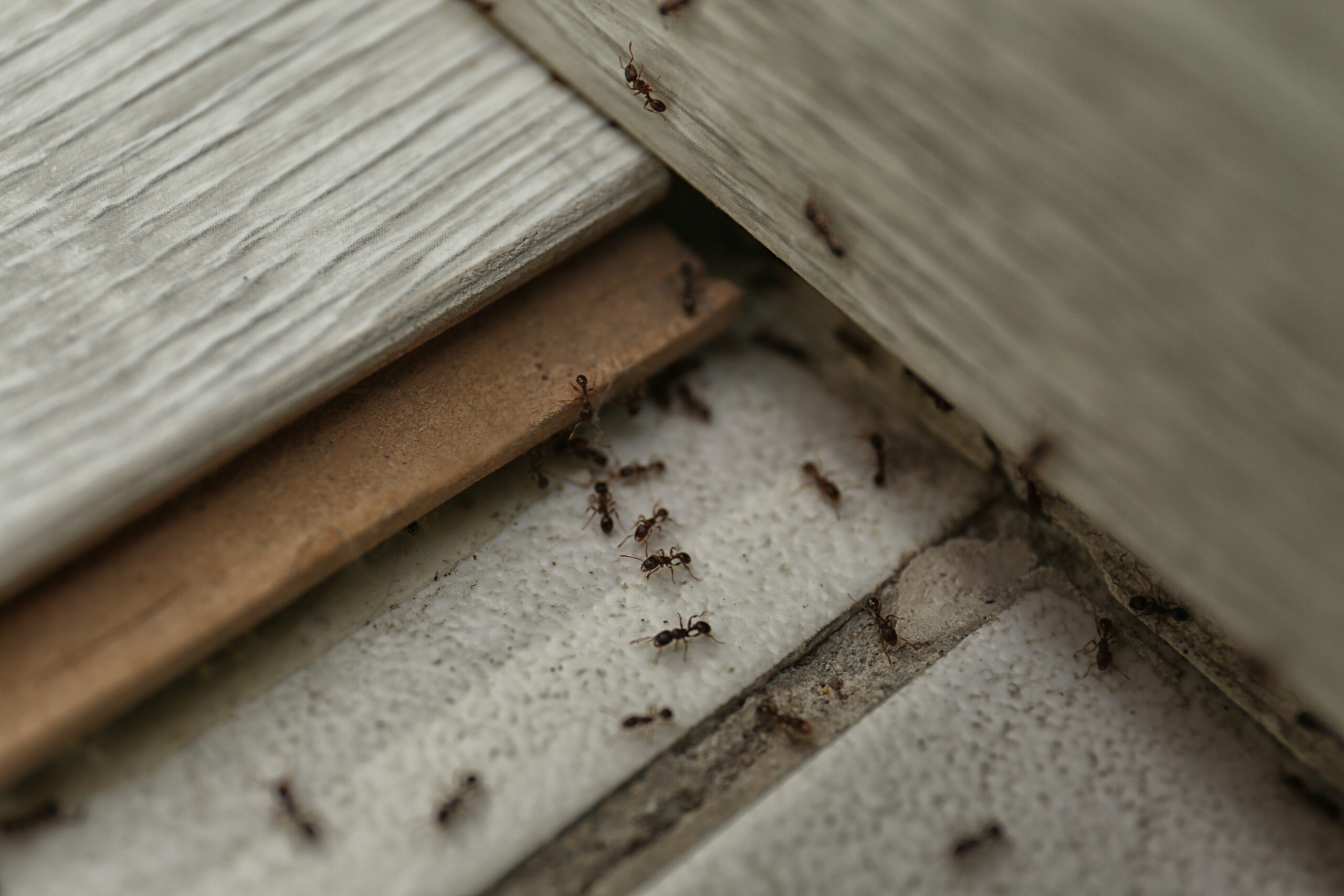
- Small, dark brown or black ants, usually found in trails leading to food
- Activity concentrated in kitchens, pantries, and around trash or pet food
- Trails that often follow the same path day to day
Numbers can build quickly once a food source is found
Signs of carpenter ants
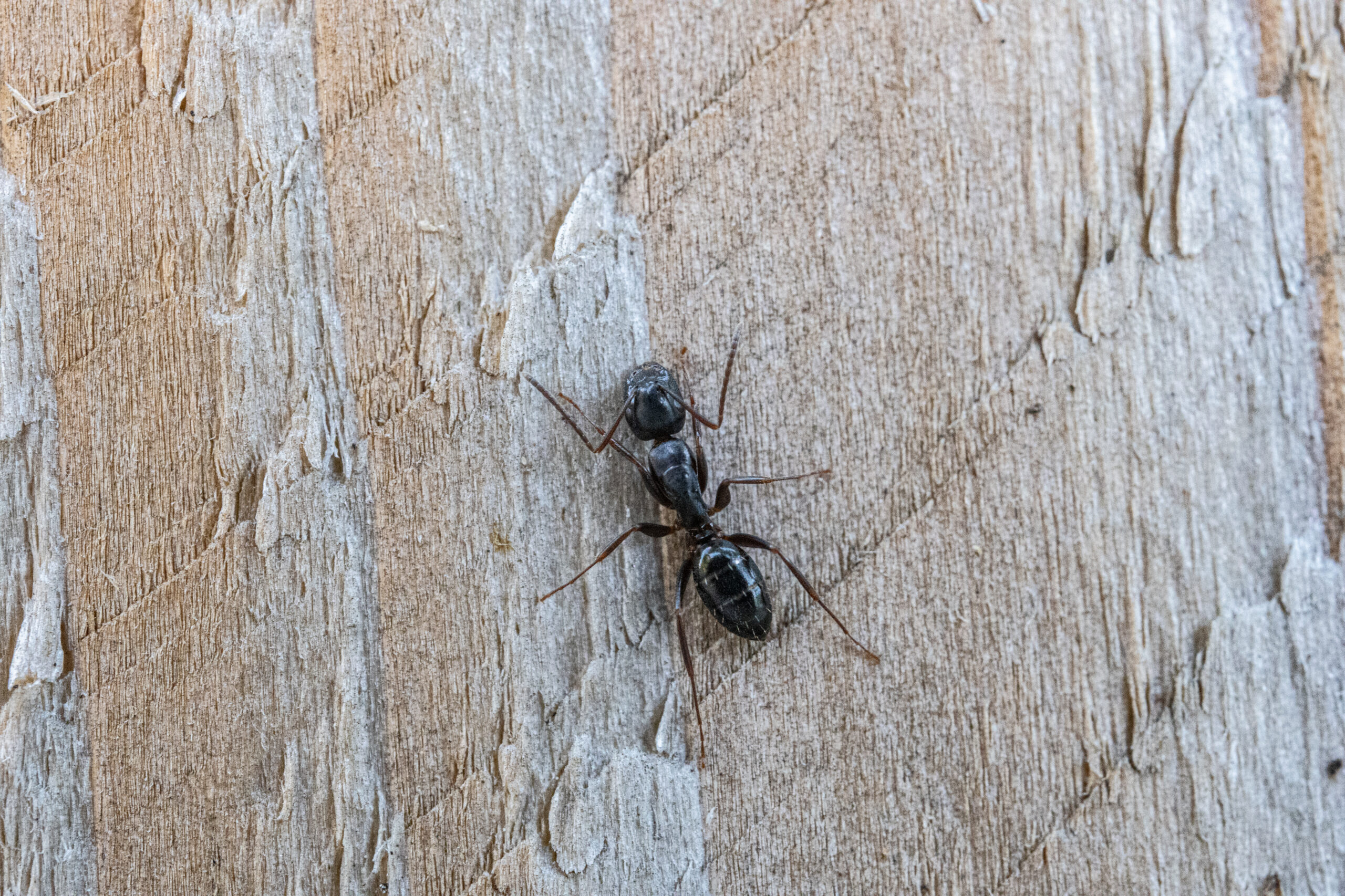
- Larger ants, often black or dark red, noticeably bigger than typical household ants
- Small piles of fine sawdust (called frass) near baseboards, window sills, or wood structures
- Faint rustling sounds inside walls, especially at night
- Activity concentrated around damp or damaged wood, including crawl spaces, window frames, and areas with past moisture issues
The key difference is that carpenter ants don't eat wood like termites do, but they do tunnel through it to build their nests, which means an established colony can cause real structural damage over time. Household ants are mostly a nuisance. Carpenter ants are worth taking seriously.
What Pisgah does about ants
Inspection first
We start by identifying which type of ant you're dealing with and how far the activity has spread. For carpenter ants, this often includes checking crawl spaces, window frames, and any areas with a history of moisture damage, since that's where they tend to nest.
Treatment
Depending on what we find, treatment may include:
- Targeted baiting to address the colony at its source, not just the ants you can see
- Perimeter treatment around the foundation and common entry points
- Direct treatment of carpenter ant nesting sites when located
- Identification and guidance on moisture issues that may be attracting activity, since damp or damaged wood is what draws carpenter ants in
Bait-based treatment is usually more effective than surface spray alone, since it allows worker ants to carry the treatment back to the colony rather than just clearing what's visible.
Ongoing prevention with HomeSafe
Ants are persistent, and a home that's attracted them once is likely to see activity again if the underlying conditions haven't changed. Our HomeSafe residential plans include ant control as part of regular quarterly visits, treating the perimeter of your home consistently rather than only after activity shows up again.
Tips to help prevent ants between visits
- Keep food sealed and counters wiped down, especially anything sweet or greasy
- Trim back tree branches and shrubs touching the house
- Address moisture issues promptly, particularly in crawl spaces and around window frames
- Store firewood away from the house and off the ground
- Seal visible gaps around windows, doors, and utility lines
Frequently asked questions
How do I know if I have household ants or carpenter ants?
Size and behavior are the biggest clues. Carpenter ants are noticeably larger and you'll often find small piles of sawdust near where they're active. Household ants are smaller and usually seen trailing toward food. If you're not sure, our technicians can identify the species on inspection.
Do carpenter ants actually damage my home?
Yes, over time. Carpenter ants tunnel through wood to build nests, and an established colony left untreated can cause real structural damage, particularly in areas with existing moisture problems. They don't eat wood the way termites do, but the tunneling itself is the issue.
Why do I keep seeing ants in my kitchen?
Household ants are drawn to food and moisture, and kitchens offer both. Once a trail is established, ants will keep returning to the same food source until it's removed or the colony is treated at its source.
Is ant treatment safe for pets and kids?
Yes, when done by a professional. Bait stations and treatments are placed away from areas your pets and kids access regularly, and we'll let you know about any precautions specific to your home.
How long does ant treatment take to work?
Bait-based treatment can take a couple of weeks to fully address a colony, since it relies on worker ants carrying it back to the nest. You'll often notice a reduction in visible activity well before that, but full elimination takes a little patience.
How can I tell if it's carpenter ants and not termites?
It's a common mix-up. Carpenter ants leave behind sawdust-like debris near their nesting sites, while termites leave mud tubes and don't produce visible debris. Carpenter ants also have a distinct pinched waist, unlike termites. If you're unsure, it's worth having a professional take a look, since the treatment approach is different for each.
Year-Round Protection for Your Home
HomeSafe plans
Choose the level of protection that's right for your family. All plans include recurring service visits and our satisfaction guarantee.
HomeSafe Basic
Essential year-round coverage
- Mice & Rats
- Spiders & Fleas
- Household & Carpenter Ants
- Hornets, Wasps & Yellow Jackets
- Cockroaches
- Stored Product Pests
- Termites
- Mosquito Control
- Ladybugs & Stinkbugs
- Carpenter Bees
HomeSafe Plus
Covers Sentricon® termite monitoring & maintenance
- Mice & Rats
- Spiders & Fleas
- Household & Carpenter Ants
- Hornets, Wasps & Yellow Jackets
- Cockroaches
- Stored Product Pests
- Termites (Sentricon® Maintenance)
- Ladybugs & Stinkbugs
- Mosquito Control
- Carpenter Bees
HomeSafe Premium
Complete whole-home protection
- Mice & Rats
- Spiders & Fleas
- Household & Carpenter Ants
- Hornets, Wasps & Yellow Jackets
- Cockroaches
- Stored Product Pests
- Termites (Sentricon® Maintenance)
- Ladybugs & Stinkbugs
- Mosquito Control
- Carpenter Bees
- Initial visits may be subject to an upcharge
- Sentricon Termite Baiting System has a one time installation fee
- Prices based on house 5000 sq. ft. or less, must call over 5000 sq. ft. for pricing

If problems with covered pests listed on your contract arise between services, we will return at no charge




