
Why is termite damage so hard to spot?
The most frustrating thing about termites in Western North Carolina is that most homeowners don't realize there's a problem until the damage is already done.
In places like Asheville, Brevard, and Hendersonville, it's common for termite activity to go undetected for three to eight years or more. That's because the Eastern Subterranean Termite, the main species in this region, works quietly behind walls, under floors, and inside crawl spaces.
You won't hear them. You usually won't see them. And by the time something looks off, they've often been there a while.
A lot of folks only find out about termite damage during a renovation or when getting ready to sell their home, which is just about the worst time to get that news.
If you've recently spotted termite swarmers around your home, it's worth understanding what that means before anything else.
If you're already starting to wonder whether something's going on, Pisgah Pest Control offers termite inspections across Western North Carolina. But first, let's walk through exactly what to look for.
What are the visible signs of termite activity?
There are a handful of warning signs you can check for yourself. The key is knowing what you're actually looking at.
Mud tubes on foundation walls
These are one of the clearest signs of termite activity, and they're worth knowing how to spot.
Mud tubes look like thin, dried lines of dirt about the width of a pencil, usually running vertically up foundation walls, along crawl space piers, or near where wood meets soil. Termites build these tunnels to stay protected while traveling between the ground and your home - they need moisture to survive and use the tubes to avoid dry air and light.
If you see mud tubes on your foundation in Buncombe County or Transylvania County, that's a strong indicator termites are active nearby or already inside the structure.
Discarded wings near windows and doors
Small piles of clear, papery wings around window sills, door frames, or light fixtures usually mean termite swarmers have already come and gone. If this is happening inside your home rather than outside, it often means a colony is already established within the structure, and that changes the urgency significantly.
Hollow-sounding wood
This one's simple to check yourself. Tap on baseboards, door frames, window trim, and floor joists if they're accessible. If the wood sounds hollow or papery instead of solid, termites may have been feeding inside it. They eat from the inside out, which is why the surface can still look completely normal while serious damage is happening underneath.
Bubbling, blistering, or cracked paint
Sometimes termite activity shows up in ways that look like a straightforward moisture issue; paint bubbling or blistering, small cracks forming along walls, or areas that look slightly warped. As termites tunnel through wood, they introduce moisture behind surfaces, which pushes paint outward and creates these subtle changes. If you're seeing this and can't trace it to a plumbing issue, it's worth having a professional take a look.
Tight-fitting doors and windows
If a door or window suddenly starts sticking, it's easy to chalk it up to humidity - and in Western North Carolina, humidity definitely plays a role. But termites can cause this too. As they feed through wooden frames, the moisture they produce can cause wood to warp slightly, making doors and windows harder to open or close than they used to be.
What does termite activity look like in a crawl space?
If your home in Asheville, Waynesville, or Hendersonville has a crawl space, this is one of the most important areas to understand, and one of the most commonly overlooked.
Crawl spaces are high-risk for termite activity for a straightforward set of reasons: they're dark, damp, poorly ventilated, in direct contact with soil, and rarely inspected. That combination is exactly what Eastern Subterranean Termites are looking for, and WNC's humid mountain climate makes it even more favorable for them.
If you decide to take a look yourself, here's what to watch for:
- Mud tubes running up foundation walls or support piers
- Damaged or hollowed-out floor joists
- Soft or crumbling wood when touched
- Small piles of tiny wood-colored pellets - these are termite droppings
- Discarded wings near vents or entry points
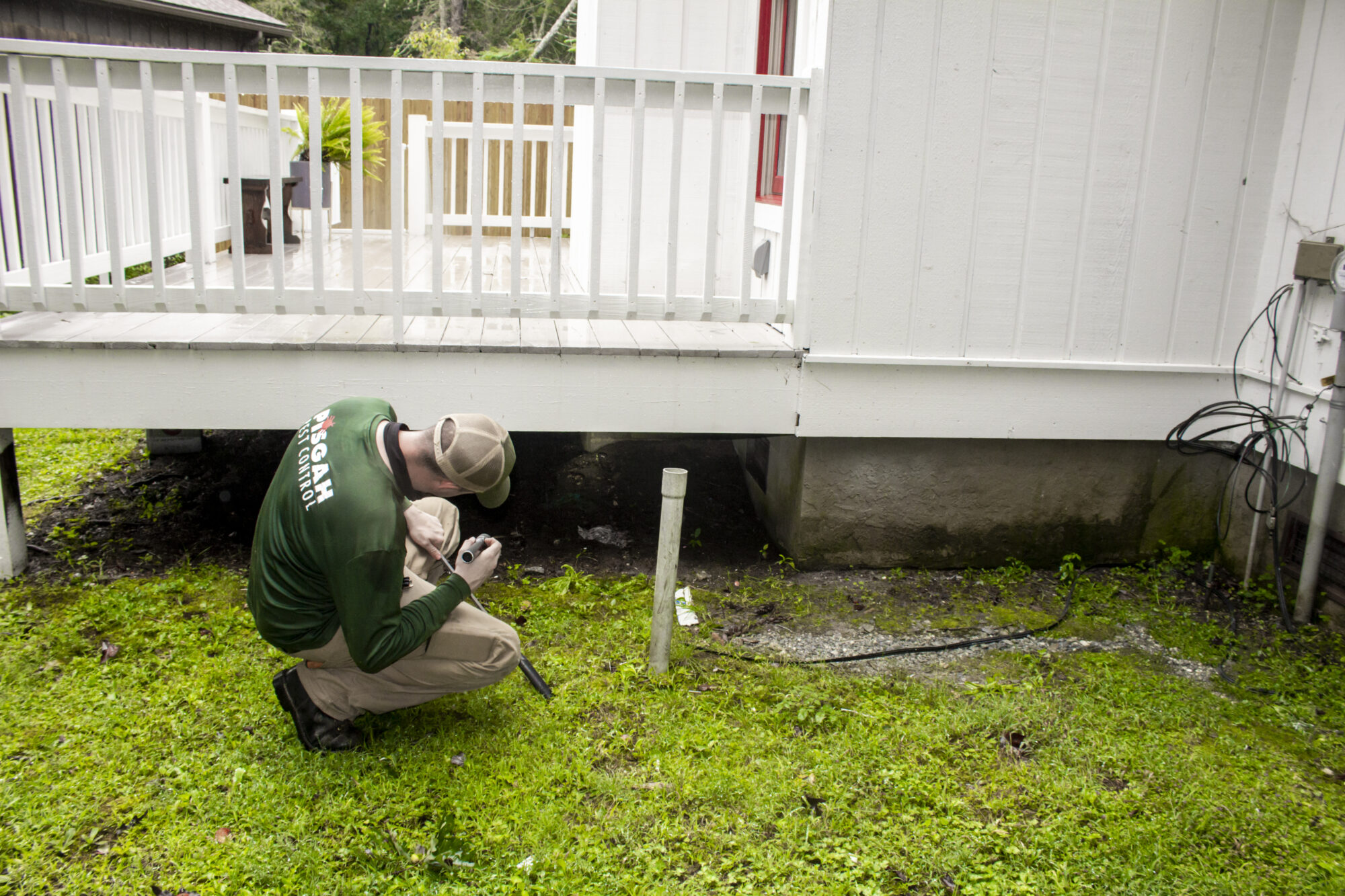
Truth is, most homeowners never go into their crawl space often enough to catch this early. And even when they do, it's easy to miss the signs if you don't know exactly what you're looking for. That's why crawl spaces are where termite problems in Western North Carolina most often start, and grow quietly for years before anyone notices.
If your home has a crawl space, getting it professionally inspected at least once a year is one of the smartest things you can do, especially given the moisture levels we deal with in the mountains.
Why do professional inspections catch what homeowners miss?
Termites don't stay out in the open. They hide inside walls, beneath flooring, deep in crawl space framing, and behind insulation and structural elements that most homeowners would never think to check.
A trained inspector knows how to spot subtle changes in wood texture, early-stage mud tube activity, moisture patterns that signal hidden damage, and entry points that aren't obvious to the untrained eye. In a region like Western North Carolina, where termite activity is common and homes often sit in wooded, moisture-rich environments, an annual inspection isn't overkill. It's just part of taking care of your home.
What's the difference between basic pest control and termite protection?
This is something a lot of homeowners don't realize until it's too late. A standard pest control plan typically covers general household pests - ants, spiders, wasps, rodents - but termite-specific monitoring and protection is a different thing entirely.
In a place like Asheville, Brevard, or anywhere across Transylvania County, that gap matters. Termites aren't a one-time issue you treat and forget about. They're a long-term risk that requires ongoing monitoring to stay ahead of.
That's where a more complete plan like Homesafe Plus comes in. It includes ongoing termite monitoring using the Sentricon® system alongside general pest protection, giving WNC homeowners the coverage that actually matches the risk level they're living with. If you'd like to explore what that looks like for your home, take a closer look at Pisgah's services.
Conclusion: What should you do next?
If you've noticed any of these signs around your home, it's worth taking seriously. Termites don't stop on their own, and the longer they go unnoticed, the more damage they can do.
The numbers put it in perspective: termites cause over $5 billion in property damage annually across the US (EPA / NPMA), and the average homeowner who discovers an infestation spends around $3,000 on repairs (Fixr / HomeAdvisor). Catching it early changes that picture considerably.
If something doesn't look right in your Asheville, Brevard, or Hendersonville home, go ahead and schedule a professional inspection and get a clear answer. The sooner you know what you're dealing with, the better your options.
In our next article, we cover exactly what termite protection looks like for WNC homeowners.
Got questions about what you've found? The Pisgah Pest Control team is always happy to help.
Quick answers about termite signs in Western North Carolina
What are the first signs of termites in your home? Common early signs include mud tubes on your foundation, discarded wings indoors, and wood that sounds hollow when tapped. In WNC homes, crawl spaces are often where activity starts.
What do termite mud tubes look like? They look like thin, pencil-width tunnels made of dried mud, usually running up concrete, brick, or crawl space surfaces. They're about the width of a pencil and often found near where wood meets soil.
Can termites damage a crawl space? Yes - crawl spaces are one of the most common places termites get established in WNC homes. The combination of moisture, soil contact, and low ventilation creates ideal conditions for Eastern Subterranean Termites.
How long can termites go undetected? In Western North Carolina, termite activity can go unnoticed for three to eight years or more, often only discovered during renovations or home sales.
What's the difference between Homesafe Basic and Homesafe Plus? Basic plans cover general household pests. Homesafe Plus includes termite-specific monitoring and protection using the Sentricon® system, which is important in high-risk areas like WNC.
Should I get an annual termite inspection in North Carolina? Yes. Given WNC's humid climate, wooded surroundings, and prevalence of crawl space construction, an annual professional inspection is one of the most practical things a homeowner can do.